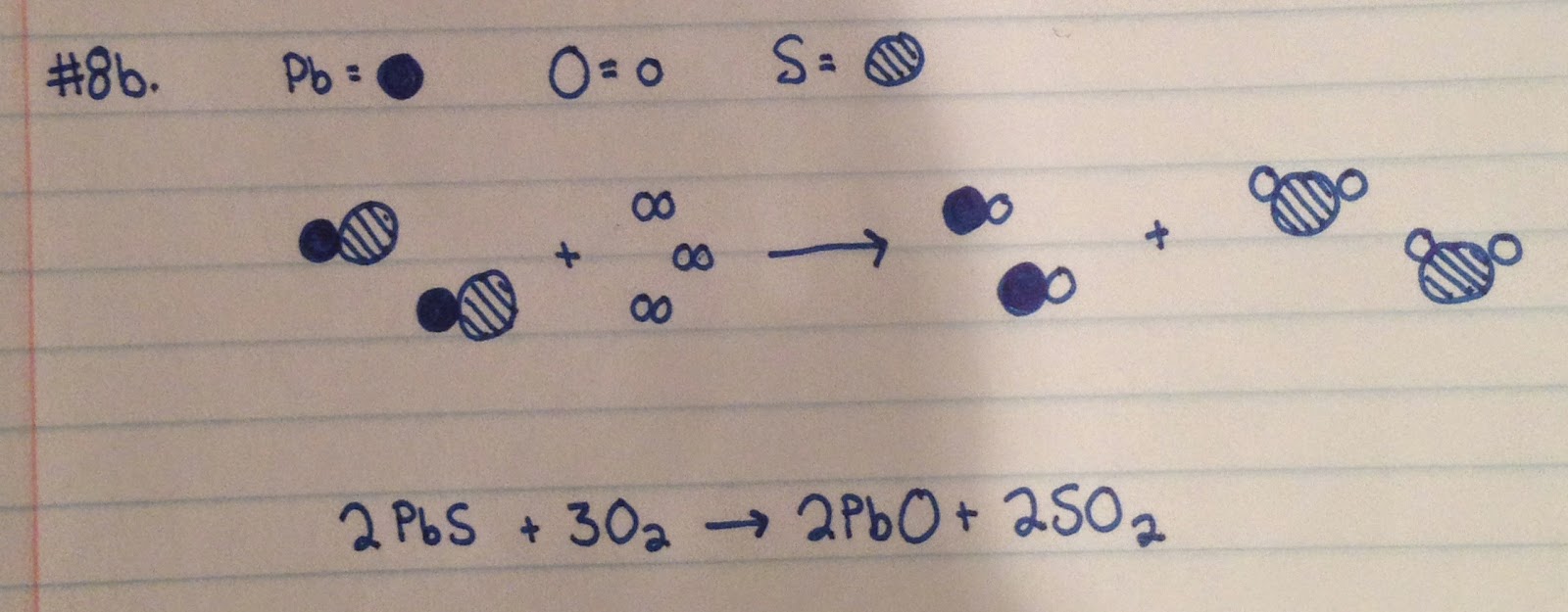
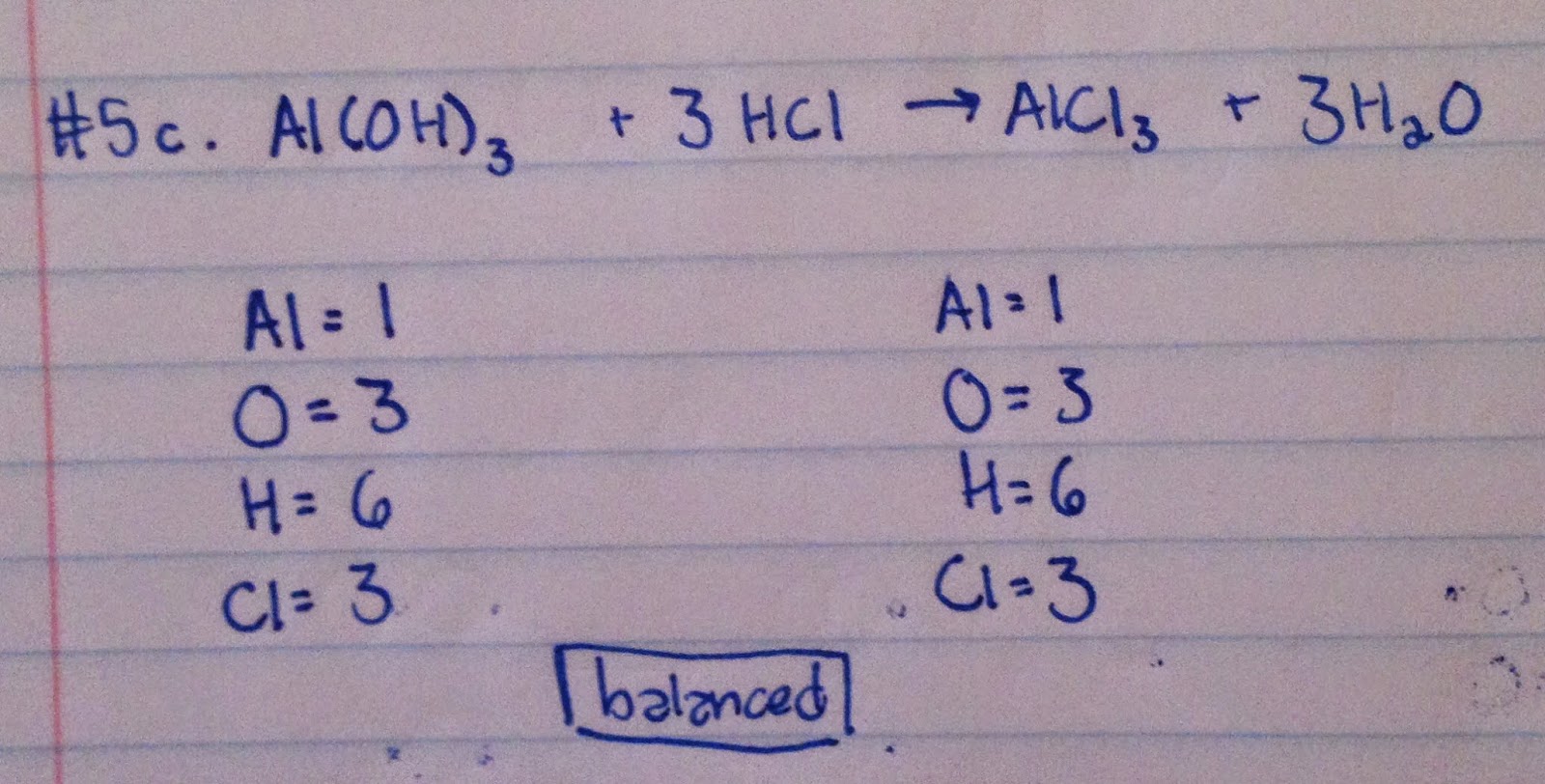
Monday, July 14, 2014
Unit 3 Section A Summary HW Problems Pt. 1
#1:
A molecular compound that contains only atoms of the elements hydrogen and carbon.
#2:
Refining a source means to process it so that its able to be used.
#3:
When converted to gasoline it is extremely useful. It can also be used as a raw material in many substances.
#4:
66% of Earth's crude oil reserves are found in the Middle East.
#5:
Crude means that the substance hasn't been processed.
#6:
a. 0.11 x 20, 000, 000 = 2, 200, 000 barrels
b. 0.89 x 20, 000, 000 = 17, 800, 000 barrels
#7:
Household lubricating oil, asphalt, motor oil, mineral oil.
#8:
a. Clothing, CDs, sports equipment, and plastic charge cards.
b. Clothing= fabric, CDs = plastic, sports equipment = strong plastic (or metal in some areas), plastic charge cards = plastic
Thursday, July 10, 2014
Unit 1 Section D Summary HW Problems Pt. 4
#13:
Carbon.
#14:
Brass is CZn. It is used for plumbing, light fixtures, rivets, screws and ships. The properties of brass vary with the proportion of copper and zinc.
#15:
Sustainability preserves the ability of future generations to thrive and meet their resource needs on a habitable Earth.
#16:
a. Reusing does not change the material itself, but recycling breaks down the material in a way so that it can be used differently.
b. Reusing: using an older sibling's clothing, using old grocery bags to wrap presents.
Recycling: card board and water bottles.
#17:
a. Renewable Resources: geothermal energy, windpower, animal fat, alcohol
b. Nonrenewable Resources: plastic, nuclear energy, gold, silver
#18:
a. reusing
b. recycling
c. reusing
#19:
The life cycle of a lightbulb would differ from the life cycle of a newspaper, because once a lightbulb has burnt out there is virtually no use for it anymore. However, newspaper can be shredded down for compost, used to wrap presents, used to lay down on a table to protect from art project, folded up to create art, or used for packing to protect the stuff inside.
#20:
A law enacted by the government can be broken or changed, while a scientific law is fact and cannot be broken.
Chemical and Physical Properties in Baking Chocolate-Chip Cookies
#1: Mix the flour with the sugar in a big bowl.
#2: Add brown sugar.
#3: Add vanilla extract.
#4: Crack two large eggs into the bowl.
Step 1-4: Physical Changes
Because the different substances are mixed together, but not chemically combined, steps 1-4 are physical changes.
#5: Mix all the ingredients together with a wooden spoon.
Step 5: Physical Change
Although the ingredients are mixed together and hard to tell apart from one another, a chemical change that alters the chemical makeup of the ingredients has not occurred.
#6: Add two sticks of butter.
#7: Mix the butter in with the other ingredients.
#8: Once the butter has been completely blended in with the original mixture, add chocolate chips.
Steps 6-8: Physical Changes (Still, Madison? Really? Is this even a project?)
Again, since the ingredients are merely mixed together, not combined chemically, they go through a physical change.
#9: Place the cookies on a tray and put them in the oven at 375 degrees.
#10: Let them bake for 7-8 mins. When they're brown around the edges, take them out and let them cool.
Step 10: CHEMICAL CHANGE (FINALLY)
Baking the cookies is a chemical change because the CO2 causes the dough to rise, and creates the porous texture on the underside of the cookies.
Unit 1 Section D Summary HW Problems Pt. 3
#7:
a. 3
b. 2
c. 1
#8:
a.
b.
c.
#9:
a. 1, 3, 2, 3
b. 2, 25, 16, 18
#10:
a. Yes, the atoms are conserved.
b. The chemical equation is balanced, but he changed the subscripts from the original equation.
c. Na2SO4 + 2 KCl -> 2 NaCl + K2SO4
#11:
An alloy is a solid combination of atoms of tow or more metals.
#12:
I use brass because it's common in plumbing and light fixtures, and I use bronze because it's in coins.
Wednesday, July 9, 2014
D.8, D.9, D.10
An alloy is a combination of atoms involving two or more metals. Making an alloy can help strengthen metals by mixing them with other elements with better qualities. For example, a niobium and tin alloy is superconductive. Superconductivity means that the alloy has the ability to conduct an electric current without any electrical resistance. Making alloys can be useful on the macroscopic level to help the sustainability level of future generations. Sustainability preserves the ability of future generations to thrive and meet their resource needs on a habitable Earth. Renewable resources like water, air, soil, plants, and animals can be maintained indefinitely, and nonrenewable resources, such as metals, natural gas, coal, and petroleum, cannot be readily replenished. The four Rs (rethinking, reusing, reducing, and recycling) help us to better the future for later generations and use the least amount of resources we can, effectively.
Unit 1 Section D Summary HW Problems Pt. 2
#1:
a.
b.
c. (a) A molecule of hydrogen is combined with a molecule of chlorine to form two molecules of hydrochloric acid. (b) Two molecules of hydrogen peroxide are formed when two molecules of water react with one molecule of oxygen.
#2:
a. NaHCO3 + HCl ---> NaCl + H2O + CO2
b. C6H12O6 + 6 O2 ---> 6 CO2 + 6 H2O
#3:
The law of conservation of matter says that in a chemical reaction, matter is neither created nor destroyed.
#4:
A phenomenon of nature that has been proven to always occur whenever certain conditions exist.
#5:
a.
b.
c.
#6:
Expressions such as "using up" and "throwing away" are misleading because the law of conservation of matter states that atoms cannot be created or destroyed.
Tuesday, July 8, 2014
Unit 1 Section D Summary HW Problems Pt. 1
#3:
a. Two molecules of hydrochloric acid are combined with one atom of magnesium to produce one atom of hydrogen and one atom of magnesium chloride.
b. HCl is a compound, Mg is an element, H2 is an element, and MgCl2 is a compound.
c.
#1:
a.
b.
c. (a) A molecule of hydrogen is combined with a molecule of chlorine to form two molecules of hydrochloric acid. (b) Two molecules of hydrogen peroxide are formed when two molecules of water react with one molecule of oxygen.
#3:
The law of conservation of matter says that in a chemical reaction, matter is neither created nor destroyed.
#5:
a.
#1:
a. One molecule of methane combines with two molecules of oxygen to produce one molecule of carbon dioxide and two molecules of water.
b.
c.
d.
a. Two molecules of hydrochloric acid are combined with one atom of magnesium to produce one atom of hydrogen and one atom of magnesium chloride.
b. HCl is a compound, Mg is an element, H2 is an element, and MgCl2 is a compound.
c.
#1:
a.
b.
c. (a) A molecule of hydrogen is combined with a molecule of chlorine to form two molecules of hydrochloric acid. (b) Two molecules of hydrogen peroxide are formed when two molecules of water react with one molecule of oxygen.
#3:
The law of conservation of matter says that in a chemical reaction, matter is neither created nor destroyed.
#5:
a.
b.
c.
#1:
a. One molecule of methane combines with two molecules of oxygen to produce one molecule of carbon dioxide and two molecules of water.
b.
c.
d.
#2:
a. One molecule of hydrobromic acid combines with magnesium to produce one molecule of hydrogen and one molecule of magnesium bromide.
b.
c.
d.
#3:
a. Four molecules of silver, four molecules of hydrogen sulfide and one molecule of oxygen combine to produce two molecules of silver sulfide and four molecules of water.
b.
c.
d.
#4:
a. One molecule of the ore hematite combines with three molecules of carbon oxide to produce two molecules of iron and three molecules of carbon dioxide.
b.
c.
d.
#5:
a. Two molecules of aluminum combine with six molecules of hydrochloric acid to produce two molecules of aluminum chloride and three molecules of hydrogen.
b.
c.
d.
Subscribe to:
Posts (Atom)